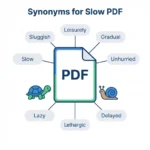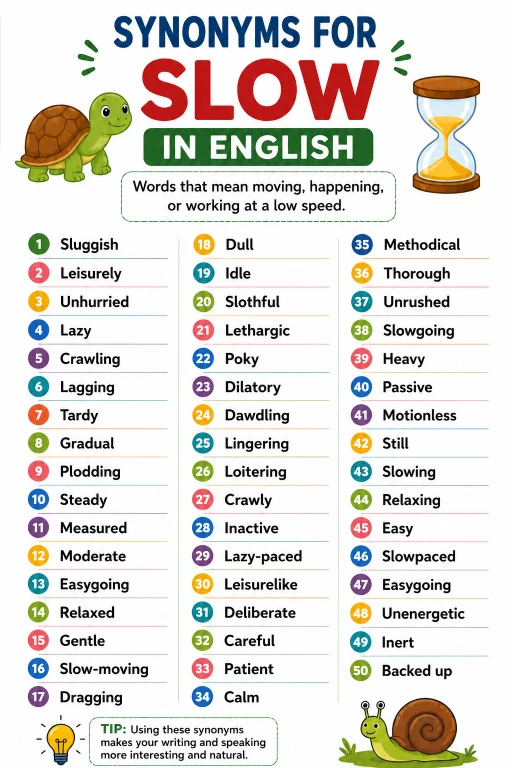
Synonyms for slow in English are words that mean moving, happening, or working at a low speed, helping you speak and write more naturally without repeating the word slow.Have you ever wanted to avoid using the word “slow” again and again? Imagine writing an essay or speaking in class. If you repeat the same word too often, your writing sounds boring. Learning synonyms for slow in English helps you sound more natural and confident.
For example, instead of saying, “The internet is slow,” you can say, “The internet is sluggish.” Small word changes make your English stronger.
The phrase synonyms for slow in English means words that have a similar meaning to slow. These words help students, bloggers, content writers, and anyone learning English. They improve writing, speaking, and everyday conversations. By learning these synonyms for slow in English, you can express yourself more clearly and make your vocabulary richer.
1.Delayed
Meaning:
Something happens later than expected.
Examples:
- The train was delayed by an hour.
- Our meeting started late because the bus was delayed.
2.Sluggish
Meaning:
Something moves or works very slowly.
Examples:
- My computer feels sluggish today.
- He looked sluggish after lunch.
3.Leisurely
Meaning:
Done in a relaxed and unhurried way.
Examples:
- We took a leisurely walk in the park.
- She enjoyed a leisurely breakfast.
4.Unhurried
Meaning:
Done without rushing.
Examples:
- He spoke in an unhurried voice.
- We had an unhurried chat after dinner.
5.Lazy
Meaning:
Not willing to work or move quickly.
Examples:
- The lazy cat slept all afternoon.
- Don’t be lazy about your homework.
6.Crawling
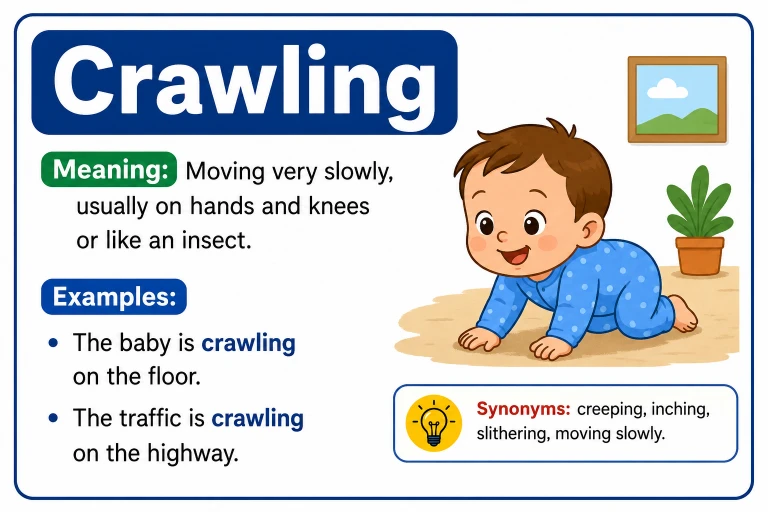
Meaning:
Moving very slowly.
Examples:
- Traffic was crawling this morning.
- The line was crawling toward the entrance.
7.Lagging
Meaning:
Falling behind others.
Examples:
- Our team is lagging behind.
- Sales are lagging this month.
8.Tardy
Meaning:
Late in arriving or doing something.
Examples:
- She was tardy for school.
- Please don’t be tardy again.
9.Gradual
Meaning:
Happening little by little.
Examples:
- The weather changed gradually.
- His English improved gradually.
10.Plodding
Meaning:
Moving slowly but steadily.
Examples:
- The worker kept a plodding pace.
- The horse made plodding steps.
11.Steady
Meaning:
Moving at a regular and even speed.
Examples:
- She made steady progress every day.
- The rain fell at a steady pace.
12.Measured
Meaning:
Done in a careful and calm way.
Examples:
- He walked with measured steps.
- She gave a measured reply.
13.Moderate
Meaning:
Not fast or extreme.
Examples:
- We drove at a moderate speed.
- The wind stayed moderate all day.
14.Easygoing
Meaning:
Relaxed and not in a hurry.
Examples:
- He has an easygoing nature.
- She took an easygoing approach to the trip.
15.Relaxed
Meaning:
Calm and not rushed.
Examples:
- We enjoyed a relaxed afternoon.
- She worked in a relaxed way.
16.Gentle
Meaning:
Moving in a soft and slow way.
Examples:
- A gentle breeze cooled the room.
- The river had a gentle flow.
17.Slow-Moving
Meaning:
Moving at a low speed.
Examples:
- A slow-moving truck blocked the road.
- The storm was slow-moving.
18.Dragging
Meaning:
Moving or happening more slowly than expected.
Examples:
- The meeting kept dragging on.
- Today is dragging by.
19.Dull
Meaning:
Moving or happening without energy.
Examples:
- Business was dull this week.
- The afternoon felt dull and quiet.
20.Idle
Meaning:
Not active or busy.
Examples:
- The workers stayed idle during the break.
- The machine sat idle all day.
21.Slothful
Meaning:
Very slow because of laziness.
Examples:
- He felt slothful on Sunday morning.
- The slothful worker finished last.
22.Lethargic
Meaning:
Feeling tired and moving slowly.
Examples:
- I felt lethargic after the long trip.
- The hot weather made everyone lethargic.
23.Poky
Meaning:
Very slow in moving or working.
Examples:
- This old computer is poky.
- The service was poky today.
24.Dilatory
Meaning:
Slow because of delay.
Examples:
- His dilatory reply surprised us.
- The project faced dilatory progress.
25.Dawdling
Meaning:
Taking too much time to do something.
Examples:
- Stop dawdling and get ready.
- The children were dawdling on the way home.
26.Lingering
Meaning:
Lasting longer than expected.
Examples:
- A lingering smell filled the room.
- She gave a lingering goodbye.
27.Loitering
Meaning:
Standing or walking around slowly without a purpose.
Examples:
- They were loitering outside the shop.
- Please don’t loiter in the hallway.
28.Crawly
Meaning:
Moving very slowly.
Examples:
- The internet felt crawly today.
- Traffic became crawly after the accident.
29.Inactive
Meaning:
Not moving or doing much.
Examples:
- The volcano has been inactive for years.
- He stayed inactive during the game.
30.Lazy-Paced
Meaning:
Moving in a slow and relaxed way.
Examples:
- We enjoyed a lazy-paced walk by the lake.
- The village has a lazy-paced lifestyle.
31.Leisurelike
Meaning:
Done in a calm and relaxed way.
Examples:
- We enjoyed a leisurelike walk after dinner.
- She finished the puzzle in a leisurelike manner.
32.Deliberate
Meaning:
Done slowly and with care.
Examples:
- He made a deliberate choice.
- She took deliberate steps across the bridge.
33.Careful
Meaning:
Done slowly to avoid mistakes.
Examples:
- Be careful when carrying the glass.
- She gave a careful answer.
34.Patient
Meaning:
Willing to wait without rushing.
Examples:
- He stayed patient in the long line.
- Please be patient while I finish.
35.Calm
Meaning:
Peaceful and not in a hurry.
Examples:
- She stayed calm during the test.
- He spoke in a calm voice.
36.Methodical
Meaning:
Done in an organized and slow way.
Examples:
- She has a methodical way of working.
- He checked each answer in a methodical order.
37.Thorough
Meaning:
Done carefully and completely.
Examples:
- She gave the room a thorough cleaning.
- Please do a thorough review before sending it.
38.Unrushed
Meaning:
Done without feeling hurried.
Examples:
- We had an unrushed lunch together.
- The teacher explained the lesson in an unrushed way.
39.Slowgoing
Meaning:
Making little progress because things move slowly.
Examples:
- The road trip was slowgoing after the rain.
- Building the house was slowgoing.
40.Heavy
Meaning:
Moving slowly because of weight or effort.
Examples:
- He walked with heavy steps.
- The cart moved slowly because it was heavy.
41.Passive
Meaning:
Not taking action quickly.
Examples:
- He stayed passive during the discussion.
- The team was too passive to win.
42.Motionless
Meaning:
Not moving at all.
Examples:
- The statue stood motionless.
- She sat motionless for a few minutes.
43.Still
Meaning:
Not moving.
Examples:
- Please stay still for the photo.
- The water was still in the morning.
44.Slowing
Meaning:
Becoming less fast.
Examples:
- The car is slowing down.
- Business is slowing this month.
45.Relaxing
Meaning:
Done in a calm and easy way.
Examples:
- We had a relaxing evening at home.
- Reading is a relaxing hobby.
46.Easy
Meaning:
Done without speed or pressure.
Examples:
- Take it easy after work.
- We enjoyed an easy walk in the park.
47.Slowpaced
Meaning:
Moving or happening at a calm speed.
Examples:
- Life in the village is slowpaced.
- It was a slowpaced game.
48.Easygoing
Meaning:
Relaxed and never in a hurry.
Examples:
- My uncle is easygoing and friendly.
- She has an easygoing attitude.
49.Unenergetic
Meaning:
Having very little energy.
Examples:
- I felt unenergetic after the long meeting.
- The class looked unenergetic on Monday morning.
50.Inert
Meaning:
Not moving or showing activity.
Examples:
- The old machine stayed inert.
- The rock remained inert on the ground.
Conclusion
Learning synonyms for slow in English is a simple way to improve your vocabulary and make your writing more interesting. Using different words instead of repeating slow helps you write better blogs, essays, emails, and school assignments. It also makes your speaking sound more natural and confident. Practice these words in your daily conversations and writing. The more you use them, the easier they will become, and your English communication skills will continue to grow.
Read more!
Synonyms for Sad: Better Words to Express Your Feelings

I create easy-to-follow English vocabulary resources designed for students, ESL learners, and writers. My work focuses on choosing the right synonym for different situations to improve writing naturally.